This report offers an eagle-eyed view of the most consequential astrology shaping calendar year 2026. It focuses on the major transits that set the tone, rather than the day-by-day texture—use the monthly reports to zoom in closer. One of astrology’s strengths is that it lets you stack the fractal layers of time: patterns repeating and interacting at different scales, from the decade down to the week, clarifying what matters in the now and what’s building, shifting and dissolving in the background.
Major Transits at a Glance
- Jan 26 — Neptune (re)enters Aires (final)
- Feb 20 — Saturn conjunct Neptune at 0° Aries
- Feb 26 — Mar 20 — Mercury Retrograde in Pisces
- Mar 03 — Virgo South Node Lunar Eclipse
- Apr 25 — Uranus (re)enters Gemini (final)
- Jun 29 — Jupiter enters Leo
- Jun 29 — Jul 23 — Mercury Retrograde in Cancer
- Jul 03 — Mars conjunct Uranus
- Aug 12 — Leo South Node Solar Eclipse
- Aug 27 — Pisces North Node Lunar Eclipse
- Oct 03 — Nov 13 — Venus Retrograde (Scorpio → Libra)
- Oct 24 — Nov 13 — Mercury Retrograde in Scorpio
- Dec 03 — Mars square Uranus
What’s Set in Motion, and What Carries Forward
With 2026 we finally and truly cross the rubicon into the Age of Air. The outer-planet sign changes that began introducing the operating system for decades to come, now start functioning as fixed conditions. Neptune and Saturn in Aries move from “testing the waters (or air as it were)” to setting in—’in no uncertain terms‘. Ignition, escalation, courage, coercion—and the demand for harder (and thus more brittle) boundaries in a world that has slipped into engineered narrative through the force-multiplier of technology. Uranus in Gemini shifts from preview to platform, accelerating the churn of (short attention) media ecosystems, machine intelligence, drone & autonomous warfare, and the communications layer through which markets and geopolitics now move. In the first half of the year, Jupiter in Cancer will, no doubt, attempt to hold the line—protection, provisioning, domestic stability—but the trend points to atmospheric turbulence ahead.
The elemental signature shift this year is unmistakable: Fire dominates 2026. With Saturn and Neptune in Aries and Jupiter entering Leo midyear, the tone becomes hotter, faster, and more decisive—less patience for ambiguity, more appetite for action, and a sharper penalty for miscalculation. Mercury tries to pull the story toward Water through the year’s three water-sign retrogrades, but Mercury is often mute in water; information arrives through emotion, leaks, rumor, and subtext rather than clear, direct communication. That mismatch matters: a year where decisions are made at speed (Fire) while the data remains murky (Water), and where “truth” becomes a contest over legitimacy; charts and graphs be damned!
Uranus’ return to Gemini also reopens a 20th-century signature that can’t be ignored: The Splitting of the Atom—not only weapons and deterrence gamesmanship, but to feed the insatiable appetite for energy infrastructure as well. Expect nuclear brinkmanship to re-enter the strategic conversation, alongside renewed focus on power generation, grid resilience, and the energy demands of the data-center buildout.
This report focuses on the alignments that define 2026’s weather: the Saturn–Neptune conjunction at 0° Aries, the water-cycle Mercury retrogrades, the final cuts of the Pisces–Virgo eclipses, the ignition of the Leo–Aquarius eclipse axis, Uranus’ final ingress into Gemini, Jupiter’s shift from Cancer to Leo, and Venus’ autumn retrograde that forces a reckoning around desire, power, and agreement. Let us begin with 2026’s most consequential transit….
Saturn–Neptune Conjunction at 0° Aries: Re-Dawning Reality
Feb 20, 2026 — Saturn conjunct Neptune at 0° Aries
This is the anchor transit of the year, and one of the defining configurations of the decade. Saturn (structure, enforcement, boundaries, material constraint) meets Neptune (dream, diffusion, glamour, dissolution, collective longing) at the inception arrow point of Aries ingress—the first degree, the ignition switch, where the emblem of dissolution and becoming interface.
Saturn–Neptune cycles run about 36 years. The last conjunction, March 3, 1989, aligned with a rapid sequence of geopolitical dissolutions and border reconfigurations; the Berlin Wall’s unraveling and the Soviet sphere’s collapse followed soon after. The Slavic world has shown a particular sensitivity to this cycle across history, and with the backdrop of the Ukraine/Russia war, it’s difficult not to flag 2026 as a year where the pressure cooker of border negotiations, national identity and economic constraint lead to dramatic and unexpected change.
The 2026 meeting arrives with a different technological substrate: the boundary between “real” and “generated” is no longer abstract science fiction—it’s being operationalized at scale. As LLMs, agentic systems, and generative media unfurl, Neptune’s fog feeds directly into Saturn’s machinery—courts, compliance, state apparatus, institutions, markets. Verification becomes a battlefield, legitimacy becomes a weapon, and authority is forced to reckon with artifacts that can be replicated at machine speed:
The zeitgeist here is whether humanity can evolve a cognitive immune system fast enough to withstand the dissolution of the real as it is refracted—and rewritten—through the digital lens.
If the first half of the 2020s was ‘Post-Truth’, the second half of the 2020s may come to be known as ‘Post-Reality’.
As consequential as this conjunction is, it’s only one piece of a larger outer-planet “lock-in” into Air and Fire—an epoch-defining configuration that sets the tone for the rest of the decade and well into the next. The pace quickens, inherited ideologies begin to fracture, and the architecture of society gets rebuilt in real time under accelerating technology.
You can read more about the historical context and consequence of Saturn & Neptune in Aires in my dedicated write-up.
Watch for:
- Border disputes, ceasefire terms, and jurisdictional “redefinitions”.
- Legal and institutional fights over authentication, provenance, and trust.
- ‘Drying up’ of state-based services and resources.
- Disorienting events where reality itself becomes contested—competing “evidence,” competing narratives, and fracturing of shared baseline reality.
- Sudden dissolution of multilateral alliances, regional integration, international trade blocs and treaty-based frameworks.
Mercury Retrograde Water Cycle: A Year of Emotional Data
All three Mercury retrogrades in 2026 occur in water signs. This puts our hermetic friend in an unusually long stretch in water this year—about 204 days—tilting the information climate toward the emotive, implicative, and the non-linear. Water signs are traditionally mute: messages often arrives through dreams, atmosphere, body languange, and leaks rather than clear and direct communication. The deeper work is integration—grief, endings, and the loss of old myths and moorings—so it’s a good year to schedule post-retrograde retreats near water (hot springs are ideal) and let the nervous system catch up. On the world stage, watch water-route disruptions, information leaks, and liquidity stress—especially where policy responses misfire—while technological development keeps pressing toward the measurement and simulation of intuition and emotional intelligence.

The first retrograde is the most consequential for the year’s tone because it arrives within days of Saturn conjunct Neptune at 0° Aries. Mercury stations in late Pisces and immediately adds fog, reversals, and narrative distortion to an already disruptive threshold crossing. When Saturn–Neptune is renegotiating the boundary between reality and projection, Mercury retrograde in Pisces ensures the story moves through ambiguity: incomplete data, projection, imagination, shifting accounts, and the sense that narratives are responding inside a haze.
Taken together, Mercury’s water cycle makes 2026 unusually personal: certainties blur, plans drift, and what can’t endure begins to wash out. The point isn’t to force clean, linear maps out of a wet year—it’s to recognize the value of feeling, dreaming, and moving through change. Stay hydrated. Slow down enough to plunge emotional depths and identify the stuck patterns that surface during each retrograde. When direct speech fails, route meaning through other channels: art, music, image, ritual, and careful listening. These periods reward upgraded emotional literacy—the ability to communicate through subtler cues even in contentious situations, without escalating the noise.
1) Mercury Retrograde in Pisces
Feb 26 – Mar 20
This retrograde tracks with the Saturn Neptune conjunction: questions of truth, mercy, sacrifice, and institutional failure. This retrograde is tightly interlaced with eclipse season and the Saturn–Neptune conjunction where we can expect shipwrecked after-images of narrative and culture.
Potential headlines / themes:
- Whistleblowers and document drops; narrative reversals.
- Disruption to water-based trade routes tied to conflict pressure.
- Banking/liquidity stress and policy decisions made inside partial information.
- Technology failures that hinge on critical data-collection methods.
2) Mercury Retrograde in Cancer
Jun 29 – Jul 23
Home, protection, infrastructure, resources, and the politics of care. Expect debates framed as “security,” revealing resource constraints at both the collective and personal.
Potential headlines / themes:
- Data centers and grids; energy strain and municipal water impact.
- Food security, tariffs, trade fallout, agriculture bailout and resource triage.
- Housing, childcare, healthcare: affordability becomes a defining argument.
- Immigration/border trauma and the administrative reality behind slogans.
3) Mercury Retrograde in Scorpio
Oct 24 – Nov 13
Investigative Mercury. Subterranean Mercury. Taboo Mercury. This is where the year’s unresolved power plays seek closure—often through exposure. Tied to the Venus Retrograde cycle (see below).
Potential headlines / themes:
- Corruption investigations; covert funding trails.
- A major breach/outage with long tail consequences (cloud, identity, or infrastructure).
- Pushback against surveillance programs; renegotiations of intelligence-sharing.
- Sanctions regimes and treaty terms revisited under pressure.
Feb/March Eclipses: Pisces–Virgo Finality
This is the closing chapter of the Pisces–Virgo eclipse series—the last pass of a story that’s been running for roughly the past year and a half. 2025 may have felt like a prolonged unraveling—the South Node in Virgo often correlated with a diminishing of embodied facts—due diligence slipping, standards eroding, practical verification fraying at the edges. At the same time, the North Node in Pisces fed an insatiable hunger for new myths, dreams, and salvational narratives to fill the vacuum. These final eclipses bring that imbalance to a peak: what couldn’t be substantiated drops away, and what people longed to believe surged forward.
The keystone for the spring eclipse cycle is the March 3 Virgo South Node Lunar Eclipse, and its ruler explains the mood. Mercury, ruling Virgo, is retrograde in Pisces, combust, and debilitated by sign—compromised messaging, missing data, narrative distortion, emotional saturation. Mercury is stuck in Pisces at the exact moment Virgo is trying to diagnose, triage, correct, and restore function. That mismatch is the season’s signature: the mind wants clean signal; the environment delivers fog, grief, exhaustion, and realities that won’t stay neatly categorized.
These eclipses are also braided into the late-winter backdrop: the Saturn–Neptune conjunction at 0° Aries and the Pisces Mercury retrograde running alongside. Expect the usual retrograde problems (communication breakdowns, tech snarls, travel disruption) to be amplified, and in some cases to land with a more permanent quality—decisions that can’t be walked back, contracts that collapse, systems that hit limits, and the stark recognition of “we can’t keep doing it this way.”
Because this is the end of the Pisces–Virgo series, it’s also personal. Whatever houses Virgo and Pisces occupy in your chart have been under revision—health and work routines, faith and loss, service and boundaries, repair and discernment. And one of the subtler collective dynamics of this cycle has been the Pisces North Node: a hunger for spirituality and esoteric praxis paired with an obscuration effect, where sincere meaning-making gets tangled with projection, glamour, and moral panic. That has produced backlash in two directions—against efforts to build a more cohesive society on compassionate ideals, and against the occult itself through suspicion and “witch-hunt” dynamics.
As we look ahead, the lunar nodes—and thus the eclipses—shift onto the Leo/Aquarius axis, pivoting from dissolution and discernment into sovereignty and systems: leadership, legitimacy, class dynamics, and the governance questions Pluto in Aquarius keeps pressing.
The Aries Ingress: The Year Chart Seals the Conjunction
In the traditional and medieval approach, the Aries ingress—the Sun crossing 0° Aries—serves as a “year chart” for worldly affairs, sketching the background conditions for the next twelve months: rulers and institutions, conflict, economic strain, public health pressures, and large-scale disruption. A location-specific analysis is beyond the scope of this report, but the 2026 ingress still works as a generalized weather map for the year ahead.
The headline is that the ingress doesn’t merely follow the late-winter signature—it seals it. With Saturn and Neptune freshly conjoined at 0° Aries, the Sun’s first encounter in Aries is effectively a stamp on the year’s central theme: reality versus narrative, enforcement versus dissolution, and the birth of new “heroic” canon for times of duress. This is not a subtle ingress. Aries sets the tempo early: bold moves, rapid escalation, and a premium on decisive posture—even when the underlying information is incomplete.
This matters because the ingress also initiates an extended Aries emphasis that builds through early spring. The conjunction at the Aries point is the match; the rest of the season is the flame catching. Mars enters Aries on April 9, restoring Aries to its own martial ruler and intensifying the atmosphere of urgency, mobilization, and confrontation. Then Mercury and the Moon (Apr 15) spotlight the Aries New Moon, further concentrating the month’s messaging, decision-making, and emotional tone around Aries themes: first moves, decisive declarations, and fast pivots—often with incomplete information.
Taken together, the ingress functions as a bridge between the year’s two major early engines: the Saturn–Neptune conjunction (the terms of reality renegotiated) and the Mercury-in-water cycle (information flowing through fog, leaks, emotion, and subtext). That combination describes a volatile mix: high heat, imperfect data. It’s excellent for rapid starts, bold initiatives, and decisive breaks from the past. It’s also the signature of overreach, moral certainty, and the recurring temptation toward “simple” solutions to complicated problems.
Uranus Re-enters Gemini: The Acceleration Gets Priced In
Apr 25 — Uranus enters Gemini (final) and stays until 2032
We got a preview from July–Nov 2025. In 2026, Uranus in Gemini is no longer in beta. With the production release of the ingress in full it becomes governing condition: innovation, disruption, and rebellion migrate into the connective tissue of modern life—communications, trade routes, transport, media ecosystems, markets, and the weaponization of information. Gemini is the sign of channels and exchange; Uranus is the misfit, the upgrader, and the disruptor. Together they correlate with rapid leaps in interface and infrastructure—new tools arriving faster than norms, laws, and institutions can metabolize them.
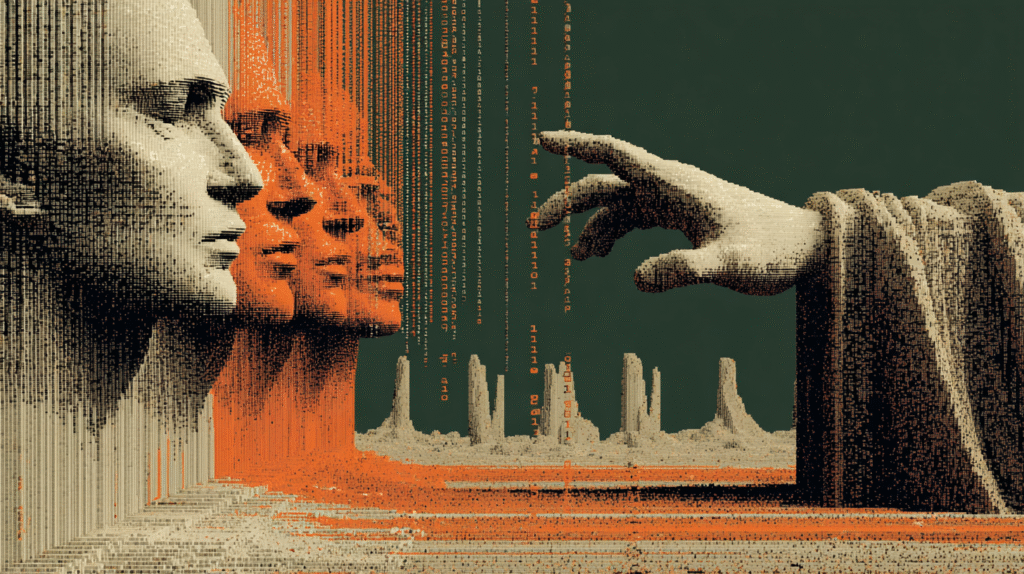
In the framework I’ve been cataloguing around Mapping the Air Epoch, Uranus in Gemini is one of the key signatures of the coming “air” shift: the world reorganizes around networks, speed, interoperability, and abstraction, with downstream consequences that become physical very quickly. Expect major developments around operationalizing Machine intelligence and agentic systems, drone and autonomy doctrine, synthetic media and narrative warfare, and digital currencies—alongside the hard infrastructure required to run it all: energy grids, data centers, supply chains, satellites, and undersea cables. The core signature here is rebellion, disruption, and innovation under acceleration—breakthroughs arriving faster than institutions and communities can integrate them, and a harsh expectation of rapid adaptation that can, at times, seem indifferent to the fragility of human life.
This ingress also completes the outer-planet geometry: Uranus in Gemini trines Pluto in Aquarius and sextiles Saturn/Neptune in Aries. That configuration is highly constructive for building new systems—faster standards, faster deployment, faster adoption. It’s also highly efficient for scaling disruption: once a breakthrough (or a failure) lands in the network layer, it propagates quickly. This is where the “technical upgrade” becomes policy, where infrastructure becomes leverage, and where the line between innovation and destabilization can be thin.
Uranus in Gemini also reopens a 20th-century signature worth naming directly: The Splitting of the Atom. Historically, this transit aligns with breakthroughs and brinkmanship around both nuclear power and nuclear weapons. In 2026 that can show a renewed emphasis on grid resilience and generation capacity—including nuclear as a strategic option—while nuclear deterrence posture and escalation risks re-enter the foreground in a more explicit way.
Pressure points (Mars–Uranus triggers):
- July 3 — Mars conjunct Uranus in Gemini: a classic flashpoint for brinkmanship, sudden escalations, accidents, and “unexpected” shocks—especially in tech, transport, markets, or conflict theaters. Treat this as a ±7 day window.
- Dec 2 — Mars square Uranus (Virgo–Gemini): a second inflection where technical and logistical systems can fail fast, and where operational pressure exposes weak links. Again, watch a ±7 day window.
Mars brings heat; Uranus brings volatility. In Gemini, the shock travels through the connective tissue of the world—signal, movement, exchange—turning small breaks into cascading events.
Jupiter Enters Leo: Prestige, Patronage, and Executive Display
Jun 29 — Jupiter enters Leo
Jupiter leaves Cancer’s protective, provisioning patronage and enters Leo’s throne room. The shift is immediate: less emphasis on sheltering and consolidation, more emphasis on recognition, visibility, honors, titles, and the legitimation of authority. If you have prominent Cancer placements—or you’re astro-magically operative—it’s worth leaning into Jupiter in Cancer during the first half of 2026 while he remains in exaltation. Jupiter’s gifts tend to be more reliable there, and more naturally tethered to stewardship, protection, and the common good before the Leonine focus on status and spectacle takes over.

Jupiter still has dignity in Leo by triplicity, supporting his better qualities: magnanimity, protection, and the impulse to sponsor what is deemed “noble.” But the style changes. Jupiter in Leo is rarely quiet. It can correlate with patronage of the arts, major cultural gestures, awards and canonizations, big political promises, and high-visibility legal or religious pronouncements. It can also inflate the shadow: pride, vanity, ideological grandstanding, and leaders who mistake performance for legitimacy. Mundane themes often cluster around courts and governance, the fusion of religion/law with executive power, and the “kingmaking” dimension of public life—who gets endorsed, elevated, and mythologized.
One stabilizing factor is Saturn in Aries trining Jupiter in Leo, perfecting on Aug 31. That aspect can provide ballast—formalization, rules, and institutional backing—so Jupiter’s Leo ambitions are more likely to translate into durable standing rather than mere display. Firmicus describes the shift well:
“Trouble and weariness is indicated by Jupiter in Leo, until Saturn arrives in Aries; in trine Saturn brings fame, reputation and protection of powerful friends.” – Firmicus Maternus, Mathesis (c. 334–337 CE)
Because Saturn is already in Aries during Jupiter’s Leo tour, the “protection” theme can arrive earlier—but it remains conditional and will be tested.
On the personal level, people with strong Leo placements (especially early degrees) often feel this first: more opportunities to be seen, to lead, to publish, to perform, to claim a title, or receive endorsement. The simplest tracking method is still the best: find the house Leo rules in your chart. That is where Jupiter tends to distribute growth, supporters, and confidence—along with the Leonine demand to carry the responsibility of being visible.
August Eclipses: The Leo–Aquarius Axis
August 2026 initiates the first full eclipse season on the Leo–Aquarius axis, a major tonal shift for the next ~18 months. Leo brings rulers, legitimacy, visibility, and the politics of honor. Aquarius brings systems, class structure, technological governance, and collective volatility.
The South Node Solar Eclipse in Leo on Aug 12th suggests the weakening of incumbency, the “light” of sovereign authority obscured, and the possibility of scandal, sedition, or legitimacy crises—especially with Jupiter and Mercury involved and Mars in hard aspect to Neptune (deception, misdirection, propaganda).
Moving forward the North Node in Aquarius amplifies themes already present with Pluto in Aquarius: oligarchy vs. egalitarian movements, state control vs. distributed networks, and the intensification of technology’s role in power. Expect a deepening of the techno-feudal dimension that is unfolding in different forms around the world.
The Aug 27 Lunar Eclipse at 4° Pisces adds a second layer: a return of Pisces themes (mystery, paranoia, witch-hunts, projection) inside a new nodal storyline. With Mars moving toward a square with Saturn, the risk pattern is agitation + confusion + enforcement pressure—an atmosphere where systems can seize and people can spiral.
Venus Retrograde: Shadow and Measure
Oct 3 — Venus stations retrograde at 8° Scorpio
Nov 13 — Venus stations direct at 22° Libra
This is one of the most personally tangible signatures of 2026. Venus makes her underworld descent and submits to trials of desire, money, alliances, aesthetics, pleasure, and the terms of reciprocity. The questions are simple and direct: What do you want? What do you value? What has been lost—and what can be found? These themes get worked at the root-zone, in the undergrowth and the mineral layer—like water finding old, forgotten channels. Blockages shift. What’s been stagnant begins to move, and you learn what was hindering the flow.
In Scorpio, Venus is in detriment: desire complicates, tastes reverse, and the shadow of attraction rises to the surface. Venus’s ‘death and resurrection theatre’ will resurface the subterranean chasm of the emotional world. Issues around jealousy, leverage, and control become more pronounced, along with the exposure of the hidden agreements beneath intimacy, loyalty, and desire. Venus stations while forming a square to Mars in Leo, and that configuration can turn relationships into arenas for pride, dominance, and coercion if people aren’t careful. At its worst, it surfaces themes of abuse and uneven power dynamics; at a broader level it tends to place women’s sovereignty and “who gets to say no” into the public conversation. The 2018 echo is worth naming explicitly: the last Venus retrograde in Scorpio aligned with peak #MeToo dynamics and high-profile disputes where sexual power, credibility, and institutional protection became inseparable.

Venus retrogrades are also notorious for the return of the past—old lovers, old collaborators, old artistic threads, unfinished business. That doesn’t automatically mean “reunion”; it often means closure, renegotiation, or a clearer understanding of why it ended. When Venus backs into Libra, she returns to domicile and renegotiates the terms in daylight: fairness, balance, agreement, aesthetics, culture, and the repair—or formal ending—of alliances. This is where Scorpio’s underworld material gets translated into balance: boundaries, contracts, commitments, and the question of whether a relationship can be made just.
One more piece ties this retrograde into the larger arc: Mars turns retrograde in early 2027. Read Venus-in-Scorpio as the unveiling of the hidden, and Mars retrograde as the consequence cycle—when power dynamics tested in late 2026 begin to reverse or exact payment. In many cases, what is confronted during the Venus retrograde doesn’t fully resolve on the spot; it sets conditions that take fuller shape once Mars slows, turns inward, and forces a reassessment of strategy around passions and appetites.
Track October–November 2018 as an 8-year reference point for the last time Venus retrograded through this part of the sky. And as always, note what houses Scorpio and Libra occupy in your chart: that’s where desire and boundaries can get complicated, and where terms may need to be renegotiated. Knowing in advance clarifies the real question: what do you want—and what’s the price?
Conclusion: The 2026 Thesis, and the Early 2027 Shadow
2026 concentrates multiple long cycles into a single year: Saturn–Neptune resets the boundary between reality and narrative; Uranus in Gemini accelerates the technical substrate; Jupiter in Leo magnifies legitimacy; eclipses move the collective storyline from dissolution and discernment (Pisces–Virgo) into sovereignty and system (Leo–Aquarius); Venus retrograde forces a public and private reckoning around power, desire, and agreement.
If there’s an organizing instruction for navigating it: slow down at the exact moments the world speeds up. In practice that means tighter verification, simpler commitments, and better emotional hygiene—especially during the water-sign Mercury retrogrades, when the signal often arrives indirectly.
Finally, keep one eye on the runway ahead: Mars retrograde begins in early 2027, and 2026 will seed its storyline. Decisions made under 2026’s urgency—especially around leadership, alliances, and escalation—will be revisited when Mars turns inward and the cost of momentum reveal cracks in the system.
2026 is consequential in a way that’s difficult to overstate. With the outer planets locking into Air and Fire, the pace of events accelerates, twists arrive quickly, and pressure cascades across systems that were already fractured. Some threads released this year won’t be fully untangled until the early 2030s—because the changes aren’t only political or technological, they’re structural. The year is hot and volatile and sets processes in motion that will take years to unfurl; don’t confuse these opening chapters for the final act. Good luck as we all embark on what is sure to be an exciting and transformative year!
My books are currently open for consultations. Find out how the year will impact your life as defined by your individual natal chart.